News From The Trail
2026 Harvest at Pine Ridge Vineyards: An Early Vintage Rewards Patience in Napa Valley
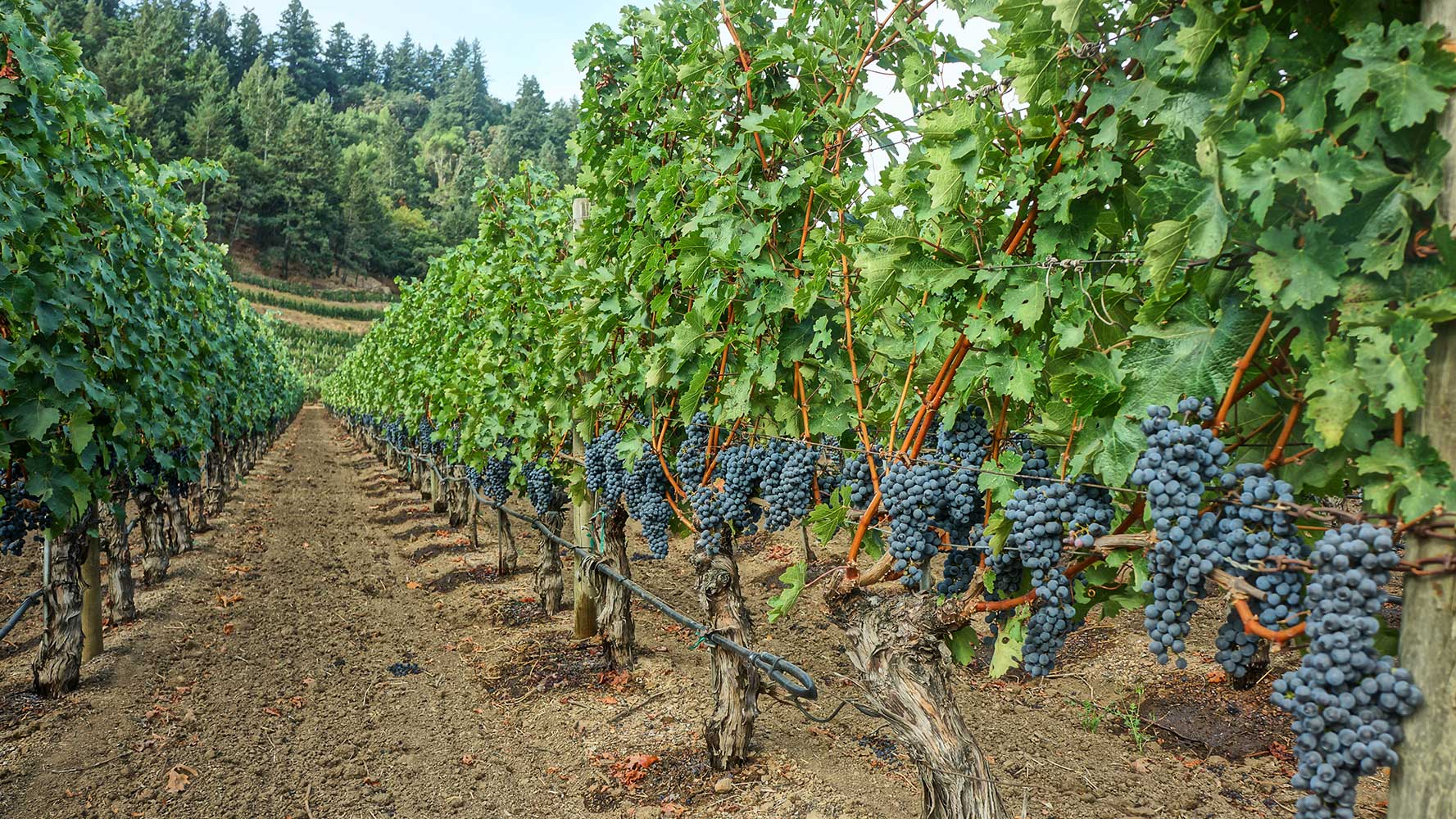
The 2026 harvest at Pine Ridge Vineyards began nearly two weeks earlier than the team has historically expected. Chenin Blanc and Viognier were harvested over a compressed four-week period from late July through the end of August, followed by a cooler stretch in early September that slowed the pace of red-fruit maturity. Now, the focus is on careful observation as Cabernet Sauvignon and other red varieties progress across Pine Ridge’s Napa Valley estate vineyards.
Across Napa Valley, the early pace is part of a broader 2026 story. Napa Valley Grapegrowers reported that warm conditions in March and April advanced bud break and bloom, while lighter crop loads at some vineyards contributed to quicker sugar accumulation and an earlier start to picking. Red varieties, including Cabernet Sauvignon, began arriving at wineries around the end of August at some sites.
For Pine Ridge, however, an early vintage does not mean a rushed one. The guiding question remains the same as it does every harvest: What is each vineyard telling us, and when is the fruit truly ready?
- Pine Ridge began its 2026 harvest nearly two weeks earlier than historically expected.
- Chenin Blanc and Viognier were harvested from late July through the end of August, completing the white wine harvest in approximately four weeks.
- Cooler weather in early September provided a pause in the season and slowed red-fruit maturity.
- Across Napa Valley, warm early-season conditions helped advance the growing cycle, while some vineyards are carrying lighter crops in 2026.
- Pine Ridge is evaluating its red varieties vineyard by vineyard and block by block rather than allowing the early calendar alone to determine picking decisions.
- In the Stags Leap District, differences in soils, exposures and temperature across individual vineyard sites make close observation especially important.
The defining feature of Napa Valley’s 2026 growing season has been its accelerated pace.
Warm weather in March and April pushed bud break and bloom forward across parts of Napa Valley. Because these early stages influence the timing of the rest of the vine’s annual cycle, an early start can continue to echo through veraison and ripening. Napa Valley Grapegrowers also notes that some vineyards are carrying less fruit than in recent vintages, giving each vine a smaller crop to ripen.
The first Napa Valley fruit intended for sparkling wine was harvested on July 21, an unusually early beginning for the region. By late August, many white varieties were already in, while red varieties had begun to arrive at crush pads around the valley.
At Pine Ridge, the early rhythm was immediately evident.
Chenin Blanc and Viognier moved through harvest in just four weeks, from late July through the end of August. For the Pine Ridge winemaking team, it was one of the earliest and most condensed white wine harvests in recent memory.
Then nature changed the tempo.
Cooler conditions in early September slowed red-fruit maturity and created something valuable in any fast-moving harvest: time.
That shift is an important reminder that a vintage is rarely a straight line. Growing seasons accelerate and pause. Vineyards develop differently. The work of the winemaking and viticulture teams is to respond to what is actually happening rather than what the calendar suggests should happen.
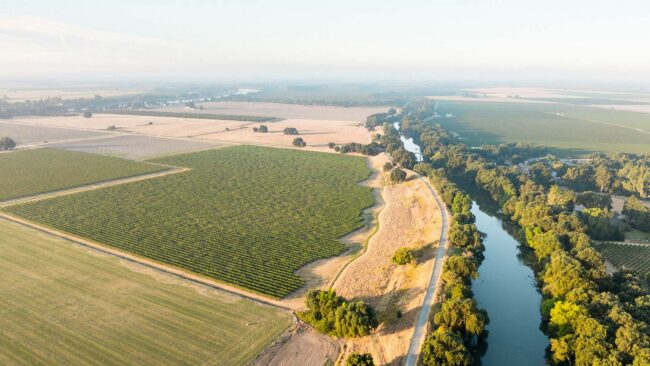
Pine Ridge’s Chenin Blanc and Viognier offer an important distinction within the 2026 harvest story: these varieties are sourced outside Napa Valley.
The Chenin Blanc comes from Clarksburg, where the Sacramento River and Delta influence contribute to a moderately long growing season, while the Viognier is sourced from Lodi, a region characterized by warm days, cool nights and Delta breezes. Pine Ridge currently blends the two varieties to create its signature Chenin Blanc + Viognier.
That means Pine Ridge’s harvest perspective reaches beyond the estate vineyards of Napa Valley. The early arrival of Chenin Blanc and Viognier gave the cellar team its first close look at the pace of 2026 before attention increasingly shifted to Cabernet Sauvignon and other estate-grown reds.
It also demonstrates why “harvest” cannot be reduced to a single start date. Different varieties, climates and vineyard sites reach maturity on their own schedules.
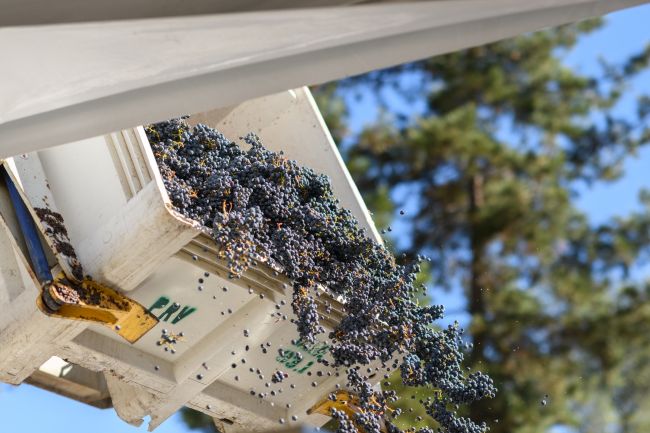
In the Stags Leap District, the 2026 harvest is a story being read one block at a time.
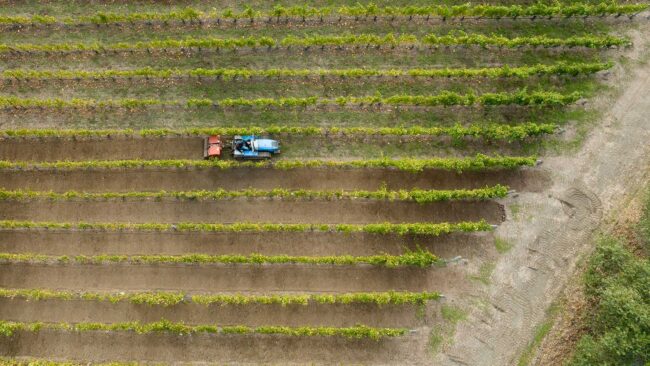
Pine Ridge was founded here in 1978 and today farms four Stags Leap District vineyard sites: Pine Ridge Estate, Locked Horns Vineyard, Cornerstone Vineyard and Circle Hill Vineyard. Across those sites, soils range from well-draining rock and sand to clay loam, creating meaningful differences in vine behavior and fruit development.
The district’s geography adds another layer. The Palisades contribute warmth during the day, while breezes influenced by San Pablo Bay help vineyards cool at night. That movement between daytime warmth and nighttime cooling is one of the environmental factors that shapes Cabernet Sauvignon here.
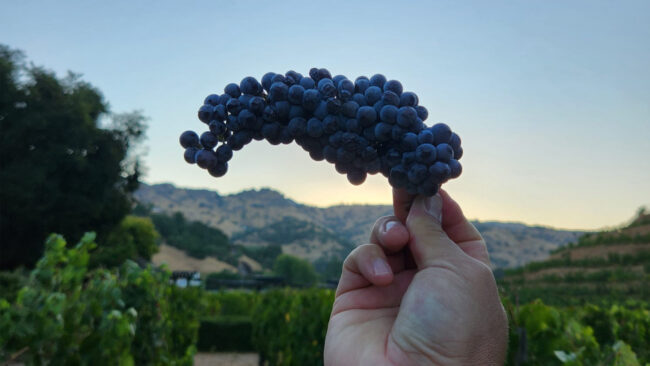
Even within the same appellation, however, there is no single harvest formula.
One vineyard block may advance more quickly because of exposure, soil, vine balance or crop load. Another may benefit from additional time. The team therefore evaluates the fruit in context, looking beyond sugar alone to understand how flavors, skins, seeds, tannins and acidity are progressing together.
This is particularly important in a season like 2026. When the vintage begins early, the temptation can be to assume that everything else should happen early as well. The cooler period in September offered a useful counterpoint: the calendar may establish the context, but the fruit makes the final argument.
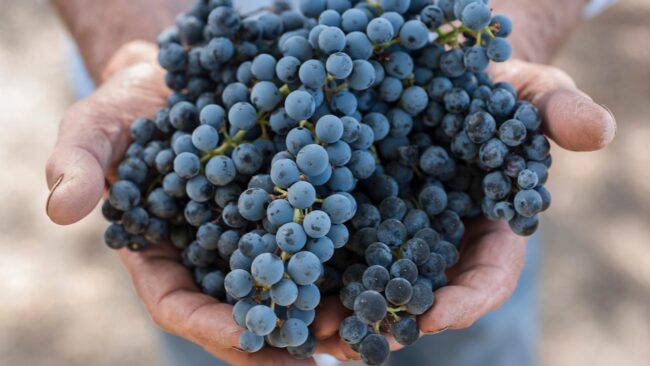
Cabernet Sauvignon is ready to pick when several indicators of maturity begin to align—not simply when the grapes reach a particular sugar level.
One measurement winemakers follow is Brix, a measure of soluble solids in grape juice that is used primarily as an indication of sugar concentration. As grapes ripen, Brix generally rises, while acidity evolves and flavors, skins and seeds continue to develop.
But Brix is only one part of the decision.
A winemaker may also taste berries for flavor development, assess the texture of the skins, evaluate seed maturity, follow acidity and pH, examine tannin development and consider the health and condition of the fruit. Weather forecasts can add another variable: sometimes a vineyard would benefit from additional hang time; at other moments, approaching weather may change the calculation.
At Pine Ridge, familiarity with individual vineyards is especially valuable. The winery farms approximately 160 acres across five Napa Valley appellations—Stags Leap District, Howell Mountain, Oakville, Rutherford and Carneros—each with its own combination of soils, elevation, climate and exposure.
Harvest decisions are therefore made with both data and experience.
The numbers tell part of the story. Walking the rows, tasting the fruit and understanding how a particular site behaves from year to year tell the rest.
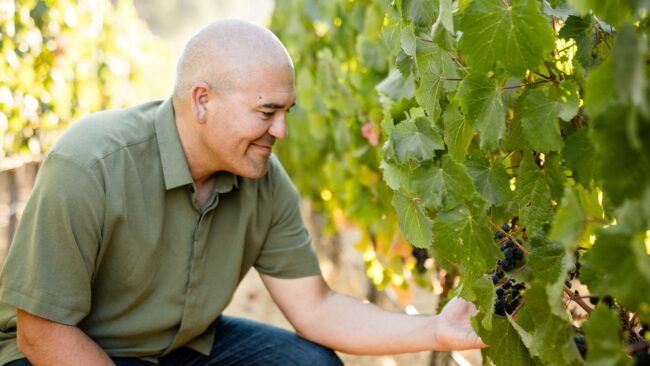
For Pine Ridge, cooler weather in early September provided a valuable pause after a rapid beginning to harvest.
When ripening slows, the additional time can allow different components of the grape to continue developing without sugar accumulating as rapidly. For Cabernet Sauvignon, that can be particularly useful because a picking decision considers much more than sweetness.
The objective is not simply maximum ripeness. It is balance.
Sugar, acidity, tannin, flavor and freshness all contribute to the eventual shape of a wine. A slower period can give winemakers and viticulturists more opportunity to observe those elements and decide when they have reached the expression they want from a particular site.
The change in weather also underscored one of the enduring realities of farming: vintages rarely follow the script established at the beginning of the season.
An early start may suggest one trajectory. A cool September morning can introduce another.
The work lies in paying attention.
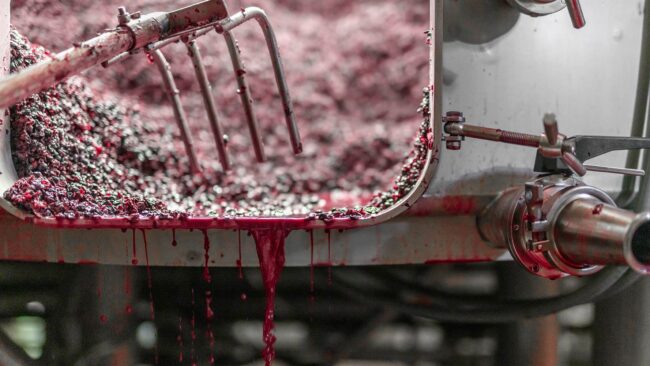
Once a harvest decision is made, Pine Ridge moves quickly to preserve what the vineyard has given.
Pine Ridge fruit is handpicked at night, when cooler temperatures help preserve freshness. In the cellar, individual vineyard and varietal characteristics continue to guide winemaking decisions rather than being treated with a single uniform approach.
For Cabernet Sauvignon, extraction becomes one of the key considerations during fermentation. Color, tannin and flavor compounds are concentrated in grape skins, so decisions surrounding fermentation temperature, pump-overs and time on the skins influence the structure and texture of the young wine.
The objective is not extraction for its own sake. It is to find the appropriate expression for the fruit.
Pine Ridge’s winemaking philosophy centers on preserving the individuality of appellation, vineyard, variety and vintage. After fermentation, the wines move through barrel élevage in the winery’s extensive cave system beneath the Stags Leap District estate.
During harvest, that philosophy begins at its most granular level.
A vineyard block is not yet a finished Cabernet. It is one piece of a larger picture that will become clearer through fermentation, élevage and eventual blending.
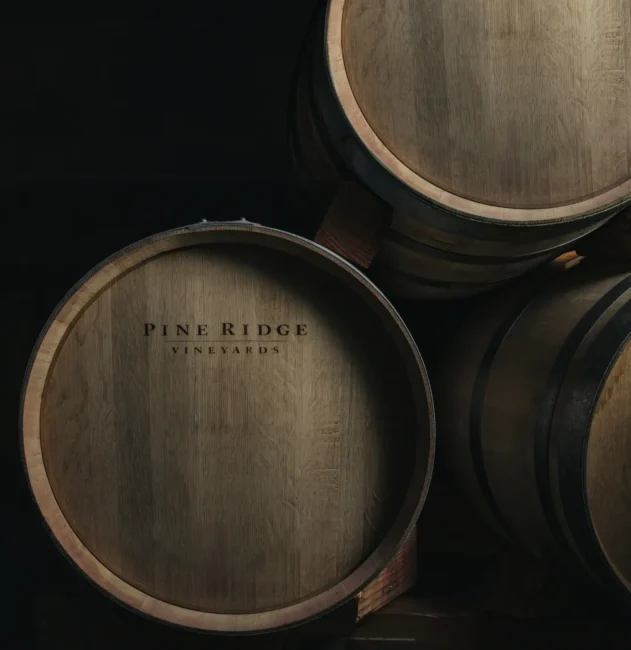
At this stage, it is too early to define the final character of Pine Ridge’s 2026 wines.
That distinction matters.
Harvest timing can provide clues about a vintage, but Cabernet Sauvignon will continue evolving through fermentation and a long period of aging before the wines are ready for release. The most responsible early assessment is therefore based on what the team can observe now rather than what it hopes to find later.
The early season has already shown an unusual rhythm: a fast start, a compressed white harvest and then a cooler September period that asked the team to recalibrate.
That combination has made adaptability one of the defining themes of the vintage.
Across Napa Valley, early reports have also pointed to concentrated fruit, healthy acidity and strong color at a number of sites, although conditions and yields vary considerably from vineyard to vineyard.
For Pine Ridge, the more meaningful answers will emerge over time, as individual vineyard blocks complete fermentation and begin to show their personalities in the cellar.
Harvest timing helps determine the balance among fruit, acidity, alcohol, tannin and structure in Cabernet Sauvignon.
Pick too early, and the grapes may not yet have developed the flavor or tannin maturity the winemaker is seeking. Wait too long, and sugar may continue rising while acidity declines, potentially changing the balance and eventual style of the wine.
There is no universal number that defines perfect ripeness.
Instead, winemakers look for alignment among analytical measurements and sensory observations. Brix, pH and acidity provide important data. Berry flavor, skin texture, seed maturity and tannin development provide another kind of information.
The vineyard itself adds the final context.
That is why a vintage such as 2026 is particularly revealing. When conditions move faster than expected, experience matters—but so does curiosity. Past vintages provide a reference point, not a set of instructions.
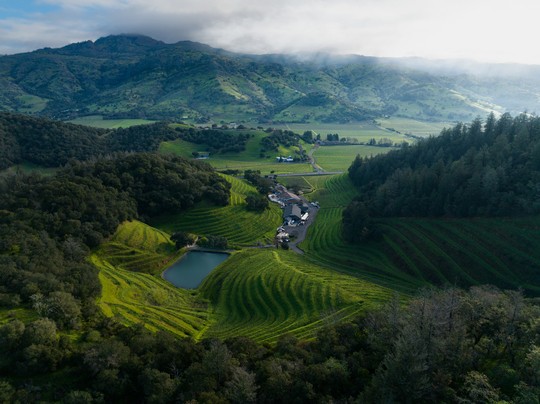
Harvest at Pine Ridge is shaped by a remarkably diverse collection of sites.
From the rocky, terraced landscape of the Stags Leap District to vineyards in Howell Mountain, Oakville, Rutherford and Carneros, Pine Ridge works across five Napa Valley appellations. The winery’s philosophy is built around understanding those differences and allowing them to remain visible in the finished wines.
In 2026, that approach feels especially relevant.
The vintage began earlier than expected. The white wine harvest moved quickly. September introduced a cooler interval that shifted the pace once again. Each change required observation before action.
For Estate Winemaker Josh Widaman and the Pine Ridge team, that is part of what makes harvest endlessly compelling. Nature provides the conditions; the vineyard reveals the details; the work is to recognize what matters.
There will be time later to look back on 2026 and understand the vintage as a whole.
For now, the most interesting place to be is where Pine Ridge has always begun: in the vineyard, paying attention to what comes next.
Frequently Asked Questions About the 2026 Napa Valley Harvest
Napa Valley’s 2026 harvest began unusually early. The first grapes destined for sparkling wine were picked on July 21, 2026. By late August, many white varieties had been harvested and some red varieties, including Cabernet Sauvignon, were already arriving at wineries. Warm conditions early in the growing season contributed to the accelerated timeline.
As of late September, 2026 is developing as an early and relatively compressed Napa Valley harvest. Warm March and April conditions advanced vine development, while lighter crop loads at some vineyards contributed to faster ripening. Early cellar reports from around Napa Valley have noted promising color, flavor and acidity, although conditions vary by site.
Pine Ridge Vineyards began its 2026 harvest nearly two weeks earlier than historically expected. Chenin Blanc and Viognier were harvested from late July through the end of August in a compressed four-week period. Cooler weather in early September then slowed the pace of red-fruit maturity, giving the team additional time to evaluate vineyard blocks before picking.
Pine Ridge farms estate vineyards across five Napa Valley appellations: Stags Leap District, Howell Mountain, Oakville, Rutherford and Carneros. The winery’s home is the Stags Leap District, where Pine Ridge farms four vineyard sites with diverse soils, exposures and growing conditions.
Pine Ridge evaluates Cabernet Sauvignon using both analytical data and sensory observation. Winemakers may consider Brix, acidity and pH alongside berry flavor, skin texture, seed maturity, tannin development, fruit condition and weather. Each vineyard and block is evaluated individually, because ripeness can progress differently even within the same appellation.
Brix is a measurement of soluble solids in grape juice and is used primarily to track sugar concentration as grapes ripen. It is an important harvest metric because sugar influences potential alcohol, but winemakers do not rely on Brix alone. Flavor, acidity, tannin maturity, berry condition and vineyard conditions also help determine the right picking time.
Pine Ridge handpicks its fruit at night when vineyard temperatures are cooler. Bringing cooler fruit into the winery helps preserve freshness and gives the cellar team greater control as the grapes move into processing and fermentation. Night harvesting is part of Pine Ridge’s detailed approach to preserving vineyard and varietal character.
Pine Ridge’s 2026 Cabernet Sauvignon will require significant time in the cellar before release. Cabernet wines undergo fermentation followed by barrel élevage, blending and bottle maturation, and specific release dates for the 2026 vintage have not yet been announced. That extended evolution is why a vintage’s final character cannot be fully assessed during harvest itself.